Red Robin
- 4.4
- Rating
- 1.00M
- Installs
- Free
- Price

 Analysis by App-foxy
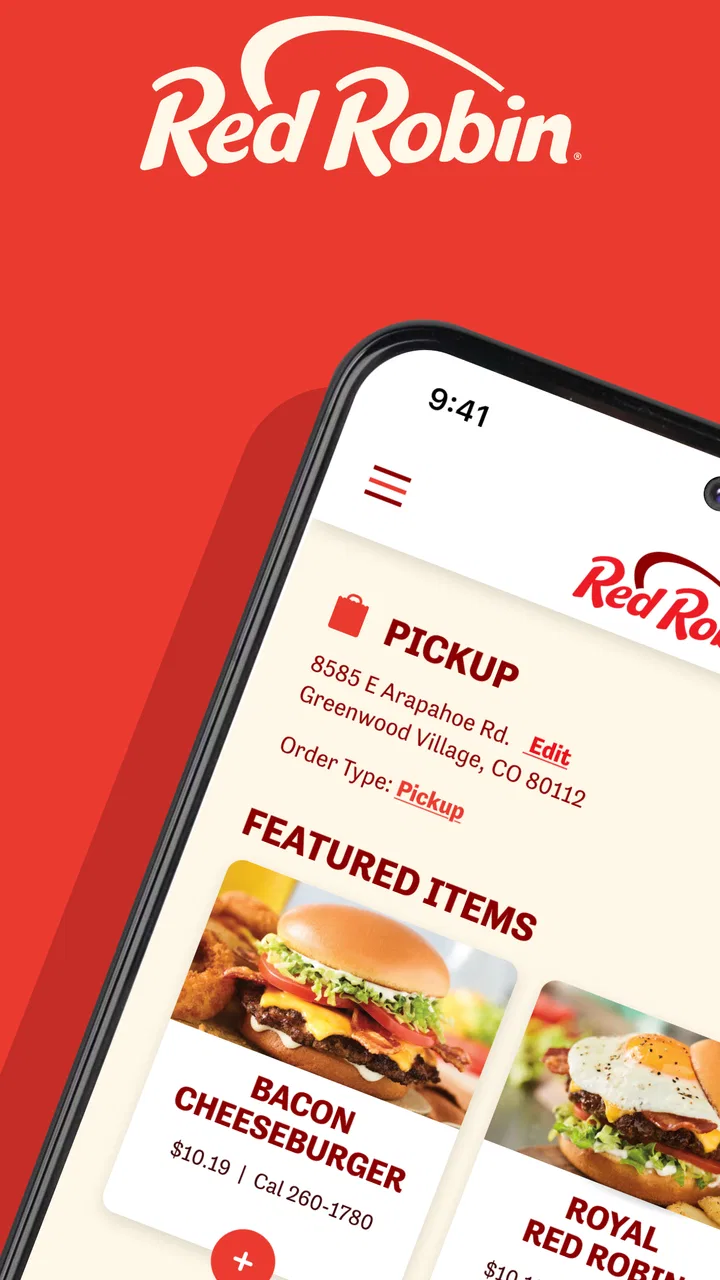
I tried Red Robin as a practical way to handle a restaurant visit rather than treating it like another app I would open once and forget. Developed by Red Robin International, Inc., this free Food & Drink app is built around ordering from Red Robin and earning rewards while doing it. That sounds simple, and in daily use, simplicity is its main appeal: it puts the restaurant’s ordering path and loyalty activity in one place instead of making me switch between a browser, a separate rewards card, and a payment step.
Red Robin is most useful when I already know I want Red Robin. It is not a general restaurant discovery tool, a meal planner, or a comparison service. Its value comes from reducing friction around one chain, especially when I am ordering ahead, repeating a familiar meal, or trying to keep track of rewards. If I am undecided about where to eat, a broader delivery or restaurant app can be more helpful. If Red Robin is already the destination, however, this focused approach makes more sense.
How the app fits into an actual Red Robin order
The first thing I noticed is that the app’s purpose is easy to understand. Rather than surrounding the main task with unrelated content, it points me toward the restaurant’s ordering experience and the rewards side of the relationship. That makes it approachable for someone who does not want to learn a complicated interface before placing a burger order.
You May Also Like

 Blood Strike: 2.5 Anniversary
Blood Strike’s Loadouts Turn Every Drop Into a Tactical Gamble
A close look at Blood Strike’s custom loadouts: how fast access to signature weapons reshapes its battle royale rhythm, rewards preparation, and narrows the gap between fights.

 Pandora - Music & Podcasts
Pandora’s Music Is Easy to Start, but Harder to Recover
Pandora’s strength is its low-effort path from a seed to a station. Its weak spot is how much confidence it asks you to place in connection, setup, and quiet recovery.

 8 Ball Pool
 Is Built on Rivalries, Rematches, and Routine
A close look at the rivalries, rematches, shared routines, and unanswered safety questions that turn a quick pool match into a persistent mobile community.

 Samsung Music
’s Quiet Strength Is Playing What You Already Own
Its reach comes less from spectacle than from dependable access to a personal library. That simplicity is both the app’s strongest retention engine and its ceiling.

 AccuWeather: Weather Radar
AccuWeather Review: A Quick, Clear Forecast for Everyday Decisions
For everyday plans, the best forecast is the one you can understand quickly. AccuWeather makes rain timing, radar, and local conditions easy to act on, with a few trade-offs.

 Hill Climb Racing
Why Hill Climb Racing Still Turns Crashes Into One More Run
A tiny car, a bumpy hill and one more upgrade: Hill Climb Racing keeps resurfacing because its simple chaos makes every near-miss feel personal.
More From Our News Desk



A realistic use case is a busy evening when I am leaving work and want food ready around the time I arrive home. I can use the app as the starting point for an order instead of waiting until I reach the restaurant. The benefit is not that it transforms dining into something new; it is that the restaurant’s own ordering route is available from a familiar mobile screen. For repeat customers, that small reduction in effort can matter more than a long list of extra features.
I also see a useful distinction between ordering and earning. Many restaurant loyalty experiences feel disconnected from the purchase itself, leaving customers to remember a separate account, card, or code. Red Robin brings those ideas together. When I use it consistently, the app becomes a record of my relationship with the chain rather than just a digital menu shortcut.
That focus also explains what the app is not. I would not install it expecting a universal restaurant wallet or a tool that compares Red Robin with nearby independent restaurants. It is a brand-specific companion. That narrow purpose is a strength for regular guests, but it is a limitation for anyone who eats at many different places and wants one app to manage everything.
Cost, access, and what “free” means here
The app itself is free, so I can install it without paying an upfront purchase price. That makes trying it low-risk, particularly if I already visit Red Robin occasionally. The free access should not be confused with free food or guaranteed savings: the app supports ordering and rewards, while the cost of a meal still depends on the order I place and the restaurant transaction involved.
This distinction is important when judging value. I would not download it because the app promises to eliminate the cost of dining. I would download it because it can make Red Robin orders easier to manage and gives regular visits a rewards-oriented layer. In other words, the financial value is tied to how often I use the restaurant, not to the installation itself.
For a person who visits only once, the free price removes the main barrier, but the practical return may be modest. Someone who orders repeatedly has more reason to keep the app available because the ordering workflow and reward activity can become part of a routine. I prefer this honest framing to treating every loyalty app as an automatic money-saving tool.
The app is rated for Everyone, which fits its straightforward restaurant purpose. It is also available for devices running Android 7.0 or later. That minimum is helpful for people using an older Android phone, although anyone with a very old or heavily restricted device should still expect the normal compatibility questions that come with mobile apps.
What I found useful beyond the basic store pitch
The first non-obvious advantage is the value of using the app before hunger becomes urgent. When I am ordering for more than one person, the mobile workflow gives me a better chance to review the order calmly before committing. That is a small but meaningful trade-off: the app is most helpful when I use it as a planning tool, not when I open it at the last second while everyone is waiting.
A second useful habit is to treat the rewards area as part of the ordering checklist. I would not assume that opening the app alone creates value. The better workflow is to sign in, confirm that I am using the intended account, review the order details, and then make sure the purchase is connected to that account where the app provides that path. This avoids the common frustration of placing an order and only afterward wondering whether it counted toward the right rewards profile.
A third insight is that the app can be more valuable for predictable repeat orders than for adventurous browsing. If I already know the meal I want, the app’s focused role is convenient. If I am looking for inspiration or comparing menus across several businesses, its narrow connection to Red Robin becomes less useful. That means the best experience depends on having a clear reason to open it.
I also found that a dedicated restaurant app can be preferable to a general delivery service in one specific situation: when I want the restaurant’s own ordering relationship and rewards experience rather than a third party’s interface. The trade-off is that a broader service may offer more restaurants or a familiar checkout process, while Red Robin’s app is more directly centered on this chain. Neither option is universally better; the right choice depends on whether loyalty to one restaurant matters more than variety.
Where the experience can feel limited
The biggest limitation is scope. Because the app is tied to Red Robin, it does not solve the wider problem of deciding what to eat. I would not recommend it as a first download for someone who rarely visits the chain. A general restaurant app, a map service, or a delivery platform may offer more useful discovery and comparison in that case.
There is also a behavioral limitation with rewards apps: their usefulness depends on remembering to use them at the right time. If I order through another route or forget which account I used, the app cannot make that earlier decision disappear. The convenience is real, but it requires a little consistency from me. For occasional customers, that extra step may feel like more administration than the rewards are worth.
Another trade-off is the difference between mobile convenience and a larger screen. I like using a phone when I am ordering alone or repeating something familiar. For a large group with many customizations, I may prefer taking more time on a bigger display or discussing the order directly. The app is not necessarily difficult, but a focused mobile interface does not remove the need to check every item carefully.
I would also avoid assuming that a restaurant app is always faster than every alternative. A saved browser bookmark, a familiar delivery app, or ordering in person may be quicker for a particular customer. Red Robin earns its place when its ordering and rewards connection is useful enough to justify opening a dedicated app. That is a practical threshold, and not everyone will cross it.
Who will get the most value from it?
Regular Red Robin guests are the clearest audience. If I visit often enough to care about rewards and I prefer ordering from my phone, the app gives me a sensible home for both activities. Families may also appreciate having the restaurant’s ordering process available before arriving, especially when a group order needs a little review rather than a rushed decision at the counter.
It can also suit people who want a direct relationship with one restaurant instead of relying entirely on a third-party platform. The free installation makes it easy to test without committing money to the app itself. I would give it a fair trial if Red Robin is already part of my normal eating routine.
On the other hand, I would tell a person who visits Red Robin only once or twice a year to think carefully before adding another app to the phone. The price is not the issue; attention is. If I am unlikely to remember the account, check the rewards area, or order through the app, the practical benefit will be limited. A one-off customer may be better served by the simplest available ordering method.
It is also not the best choice for someone whose priority is comparing total meal costs across restaurants. This app is designed around Red Robin, not around finding the cheapest nearby option. A broader service is better for that job. Choosing Red Robin means accepting a narrower tool in exchange for a more direct restaurant-specific experience.
Performance, maturity, and everyday confidence
The app has an average rating of 4.3 from around four and a half thousand ratings, with roughly one and a half thousand written reviews. It has also passed one million installs. Those figures suggest that it is not an obscure experiment with only a handful of users; there is a substantial audience using it for the same restaurant-centered purpose.
Its current version is 3.4.1, and the release history shown for the app begins on November 11, 2021. I do not treat version numbers as a guarantee that every phone or ordering situation will be perfect, but they do make the app feel like an established product rather than a temporary campaign. For me, that matters when I am deciding whether a dedicated loyalty app deserves space on my phone.
Still, I would keep a practical backup in mind. Restaurant ordering depends on more than the app: the selected location, the order timing, account details, and the restaurant’s own ability to fulfill the request all matter. If I am arranging food for an important event or a large group, I would review the final order carefully and avoid assuming that a mobile confirmation alone replaces common sense.
My verdict on value
My recommendation is straightforward: install Red Robin if you already like eating at Red Robin and expect to order there more than occasionally. The free app gives that audience a focused way to order and participate in rewards, and the combination is more useful than either function would be in isolation. I especially like it for planned pickup-style situations, repeat meals, and customers who want to keep their restaurant activity tied to one account.
I would skip it if I am looking for a general food app, a restaurant comparison tool, or a way to discover many independent dining options. I would also skip it if I know I will not remember to use a dedicated app when ordering. In those cases, the usual browser or broader restaurant service may be less specialized but more convenient overall.
After using it, I see Red Robin as a practical companion rather than an essential app for everyone. Its strongest feature is its clear purpose: helping Red Robin customers place orders and build a rewards habit without paying for the app itself. For a repeat customer, that focused convenience is the real value; for an occasional visitor, the free download may still not justify another app on the phone.
Overall, I would recommend it to friends who already choose Red Robin and want a more organized mobile routine. I would describe it honestly as a chain-specific tool, not a universal food solution. That distinction makes the decision easy: if the restaurant is part of your regular life, it is worth trying; if not, a broader alternative will probably serve you better.
FAQs for Red Robin
01What is the main objective of Red Robin?
Red Robin is a fast-paced, action-packed game where players take on the role of a heroic character navigating through various challenges. The main objective is to complete missions, overcome obstacles, and defeat enemies to progress to higher levels. The game offers a mix of strategy and quick reflexes, making it engaging for players who enjoy dynamic gameplay.
02Is Red Robin free to download and play?
Red Robin is free to download from both the Google Play Store and Apple App Store. While the game offers many features at no cost, it includes optional in-app purchases that allow players to enhance their experience by unlocking special abilities or cosmetic items. These purchases are entirely optional and not necessary to enjoy the full game.
03What are the system requirements for Red Robin?
To run Red Robin smoothly, Android devices should be running a minimum of Android 5.0, while iOS devices need iOS 11.0 or later. The game requires around 150 MB of storage space. It is optimized for both smartphones and tablets, but it is recommended to check compatibility with your device before downloading.
04Does Red Robin require an internet connection to play?
Red Robin can be played offline, allowing players to enjoy the game without needing a constant internet connection. However, some features, such as leaderboards and multiplayer modes, require an internet connection to function. Playing online also enables the game to receive updates and new content regularly.
05Are there any parental controls available in Red Robin?
Yes, Red Robin includes parental controls to ensure a safe gaming environment for younger players. Parents can restrict in-app purchases and limit access to certain features. Additionally, the game does not include any inappropriate content, making it suitable for a wide range of age groups. Parents are encouraged to review these settings before allowing children to play.
Pros
- User-friendly interface and design.
- Extensive menu with diverse options.
- Easy online ordering process.
- Rewards program for loyal customers.
- Quick and reliable delivery service.
Cons
- Limited customization for orders.
- Occasional app performance issues.
- Inconsistent customer service.
- Requires account creation to order.
- In-app ads can be intrusive.

Red Robin
Gallery